
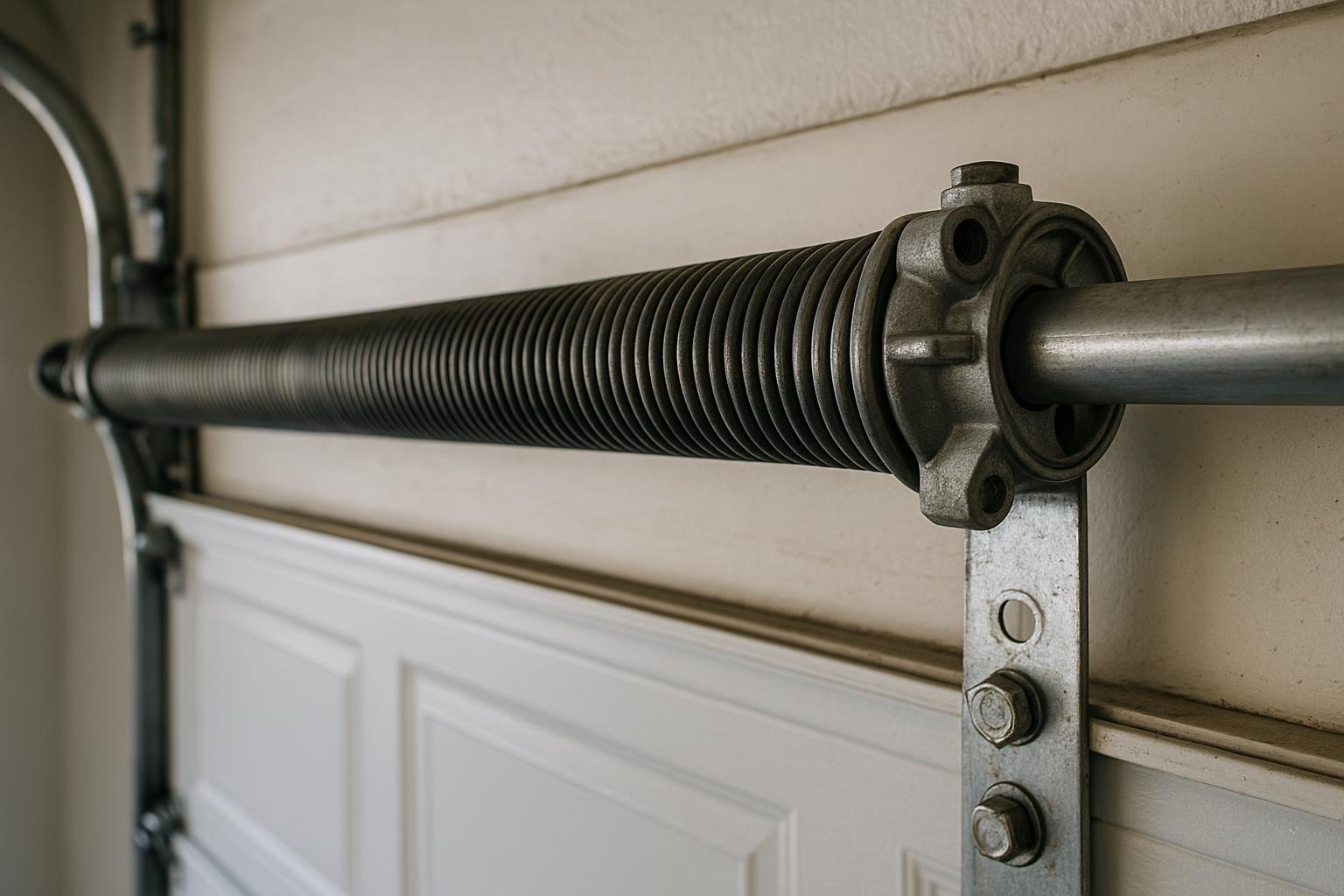
Your Garage Door Springs Are Doing More Work Than You Think
Every time you open or close your garage door, the springs are doing the heavy lifting — literally. A standard two-car garage door can weigh between 150 and 250 pounds, and the springs are responsible for counterbalancing all of that weight. Without them, your garage door opener couldn't move the door at all, and lifting it manually would be nearly impossible.
Despite how critical they are, most homeowners in Imperial Beach and the surrounding South Bay area rarely think about their garage door springs until something goes wrong. And when a spring fails, it usually happens suddenly — with a loud bang and a door that won't budge. Understanding the lifespan of your springs and knowing when to replace them can save you from unexpected breakdowns, costly emergency repairs, and even potential safety hazards.
How Long Do Garage Door Springs Last?
The lifespan of a garage door spring is measured in cycles. One cycle equals one full open-and-close of the door. Most standard torsion springs are rated for approximately 10,000 cycles, which translates to roughly 7 to 10 years for the average household that opens and closes the garage door three to four times per day.
However, several factors can shorten or extend that lifespan:
- Frequency of use: If your garage door is your primary entry point — which is common for many Imperial Beach families — you could be running through 6 to 8 cycles per day, cutting the spring's life significantly.
- Spring quality: Higher-quality springs rated for 20,000 or even 25,000 cycles are available and worth the investment, especially if you use your garage frequently.
- Climate and environment: Living close to the coast means your springs are exposed to moisture and salt air, which accelerates rust and corrosion. This can weaken the metal and cause premature failure.
- Maintenance: Springs that are regularly lubricated and inspected tend to last longer than those that are neglected.
Warning Signs Your Garage Door Springs Are Wearing Out
Springs rarely fail without giving you some warning signs first. Here's what to watch for:
The Door Feels Heavier Than Usual
If you disconnect the opener and try to lift the door manually, it should move fairly easily and stay in place when you let go halfway up. If the door feels unusually heavy or slams down when released, the springs are losing their tension and nearing the end of their life.
The Door Opens Unevenly or Crooked
When one spring is weaker than the other — or if you have a single spring that's wearing unevenly — the door may rise at an angle. This puts extra stress on the tracks, cables, and opener, potentially causing additional damage.
Visible Gaps in the Spring Coils
Take a look at your torsion spring above the door. A healthy spring has tightly wound coils with consistent spacing. If you notice a visible gap or separation in the coils, the spring has already broken or is about to.
Loud Squeaking or Grinding Noises
While some noise is normal, excessive squeaking, grinding, or popping sounds during operation can indicate that the springs are corroded, dry, or under uneven stress.
The Opener Struggles or Stops Mid-Cycle
Your garage door opener is designed to work with properly functioning springs. When springs weaken, the opener has to work harder to move the door. You might notice it straining, stopping partway, or even overheating and shutting off.
Can You Replace Garage Door Springs Yourself?
This is one of the most common questions we hear from homeowners in Imperial Beach and neighboring communities like Chula Vista and Coronado. The short answer is: we strongly advise against it.
Garage door springs are under extreme tension. A torsion spring stores enough energy to cause serious injury — or worse — if it's improperly handled. Professional technicians use specialized tools and follow strict safety protocols to remove and install springs safely.
Beyond the safety risk, improper spring replacement can lead to:
- Incorrect spring size or tension, causing the door to operate poorly
- Damage to cables, drums, or the opener
- Voided warranties on your garage door or opener
- Repeated failures requiring additional repairs
Having a trained professional handle the job ensures the correct springs are installed with the right tension, and that the entire system is inspected for any related wear.
Proactive Replacement vs. Waiting for a Break
Many homeowners wait until a spring snaps before calling for service. While that's understandable, there are real advantages to replacing springs proactively:
- Avoid being stranded: A broken spring means your car could be stuck in the garage — or your home left unsecured with the door stuck open.
- Prevent secondary damage: When a spring breaks, the sudden release of tension can damage cables, bend tracks, or harm the opener. Replacing worn springs before they snap avoids these costly secondary repairs.
- Schedule on your terms: Proactive replacement lets you book service at a convenient time rather than scrambling for an emergency visit.
- Save money: Emergency service calls and the additional repairs caused by a sudden break almost always cost more than a planned spring replacement.
How Coastal Living in Imperial Beach Affects Your Springs
If you live within a few miles of the shoreline — as most Imperial Beach residents do — your garage door hardware faces accelerated wear from the marine environment. The salt-laden air promotes rust on metal components, and springs are particularly vulnerable because corrosion weakens the steel and reduces its flexibility.
To combat this, we recommend:
- Applying a silicone-based lubricant to your springs every three to four months
- Scheduling an annual preventive maintenance visit to inspect springs, cables, rollers, and hardware
- Considering upgraded, coated, or galvanized springs that offer better corrosion resistance
When to Call a Professional
If you've noticed any of the warning signs mentioned above, or if your garage door springs are approaching the 7-year mark, it's a good idea to have them inspected. For homeowners in Imperial Beach, National City, San Ysidro, Nestor, and throughout the South Bay, our team at Imperial Beach Garage Door Specialists provides thorough spring inspections and replacements with same-day service in most cases.
We also offer emergency garage door service for those moments when a spring breaks unexpectedly and you need help fast. Whether it's a routine replacement or an urgent repair, we'll make sure your door is safe, balanced, and operating smoothly.
Don't Wait for the Bang
Your garage door springs are one of the hardest-working components of your home. They cycle thousands of times a year, bear hundreds of pounds of weight, and endure the coastal elements that come with living in Imperial Beach. Giving them a little attention before they fail can save you time, money, and a whole lot of frustration. If it's been a while since your springs were inspected — or if something just doesn't feel right — reach out to us and we'll take a look.