
Your Garage Door Shouldn't Sound Like That
You press the button on your garage door opener, and instead of the smooth, quiet hum you're used to, you hear grinding, squealing, popping, or rattling. It's easy to ignore at first — maybe it'll go away on its own, right? Unfortunately, strange garage door noises almost never resolve themselves. They're usually early warning signs of a mechanical problem that will only get worse over time.
If you're a homeowner in Imperial Beach, understanding what these sounds mean can save you from a costly emergency repair down the road. Let's break down the most common garage door noises, what causes them, and what you should do about each one.
Grinding or Scraping Sounds
A grinding or scraping noise when your garage door opens or closes is one of the most common complaints we hear from homeowners. This sound typically points to one of a few issues:
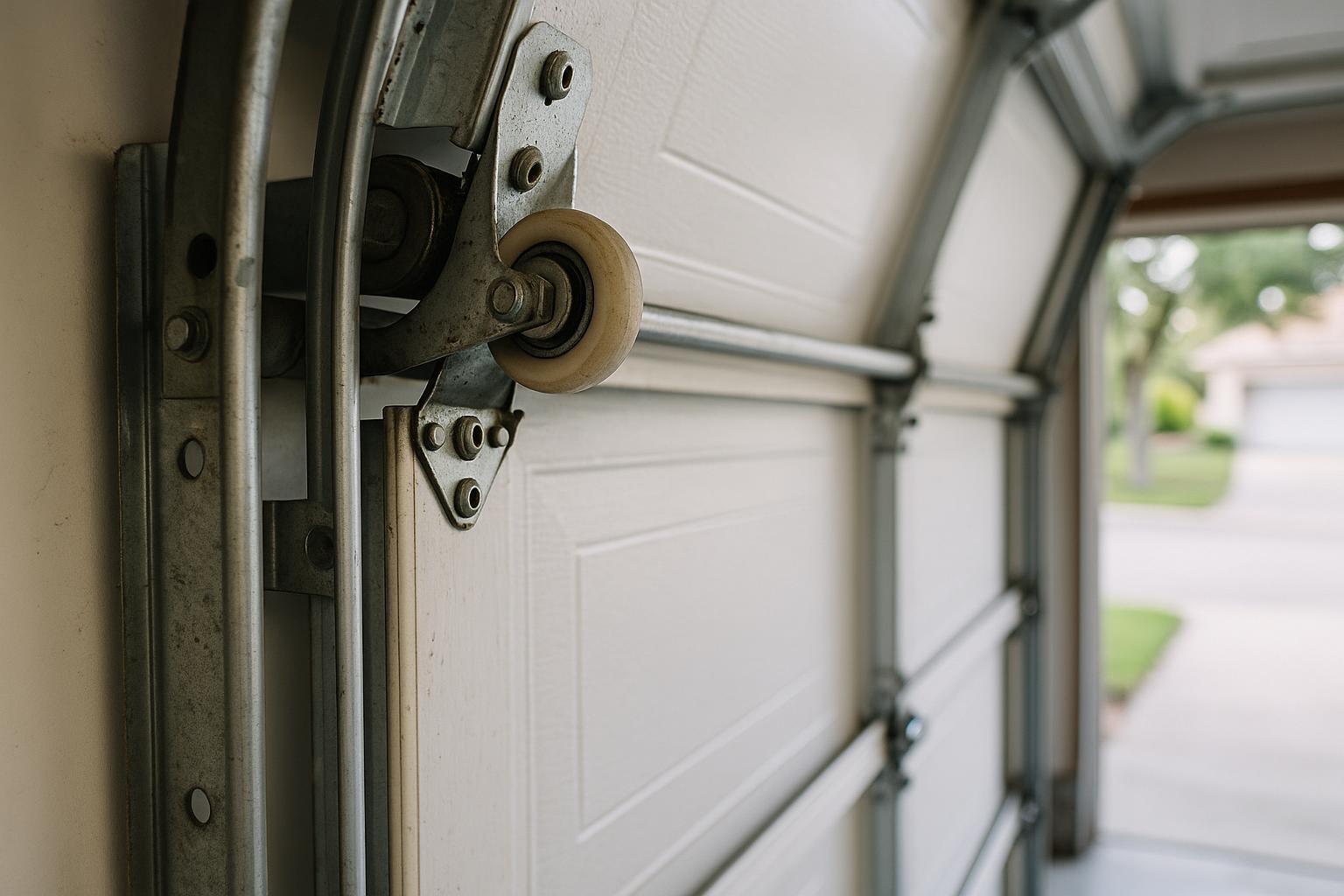
- Worn rollers: Metal rollers that have lost their lubrication or have begun to deteriorate will grind against the track as the door moves. Nylon rollers are quieter and last longer, and upgrading to them is a relatively simple fix.
- Misaligned tracks: If the vertical or horizontal tracks have shifted even slightly, the door can scrape against them as it travels. This creates friction, noise, and uneven wear on the door's hardware.
- Opener gear issues: Inside your garage door opener, there's a drive gear — usually made of plastic or nylon — that can strip or wear down over time. When this happens, you'll hear a grinding sound coming from the motor unit itself.
If you notice grinding, it's worth having a technician inspect the system before a minor issue turns into a door that won't open at all.
Squealing or Screeching Noises
High-pitched squealing is hard to ignore, and your neighbors in Imperial Beach probably aren't thrilled about it either. This sound is almost always related to friction — metal parts moving against each other without enough lubrication.
The most common culprits include:
- Dry hinges and rollers: Every moving part on your garage door needs periodic lubrication. Without it, metal-on-metal contact creates that unmistakable screech.
- Torsion spring coils binding: As torsion springs wind and unwind, the coils can rub together. A light application of garage door-specific lubricant usually quiets them down.
- Worn bearings: The bearings in the spring tube and rollers can dry out and begin to squeal. Replacing bearings is inexpensive but should be done by a professional, especially when spring components are involved.
A Quick Lubrication Tip
Use a silicone-based or lithium-based garage door lubricant — not WD-40. WD-40 is a solvent and degreaser, not a long-term lubricant. It can actually strip existing lubrication and leave parts more vulnerable to wear. Apply lubricant to the rollers, hinges, springs, and bearing plates every six months for best results.
Rattling or Vibrating Sounds
Rattling usually means something is loose. Over time, the constant vibration of a garage door opening and closing multiple times a day can loosen nuts, bolts, screws, and brackets throughout the system. Common sources of rattling include:
- Loose track hardware: The bolts securing the tracks to the wall or ceiling can work themselves loose.
- Chain drive slack: If your opener uses a chain drive, a loose chain will slap and rattle during operation. Adjusting the chain tension usually solves the problem.
- Loose opener mounting: The opener unit itself can vibrate against the ceiling if its mounting brackets have loosened.
A simple walk-around inspection with a socket wrench can tighten most loose hardware. However, avoid adjusting anything connected to the springs or cables — those components are under extreme tension and should only be handled by a trained technician.
Banging or Popping Sounds
A loud bang or pop is the noise that gets homeowners' attention the fastest, and for good reason. These sounds can indicate:
- A broken torsion spring: When a torsion spring snaps, it releases a tremendous amount of stored energy and produces a loud bang that many homeowners describe as sounding like a gunshot. If you hear this, do not attempt to operate the door. Call for professional repair immediately.
- Panel sections shifting: As the door moves along the tracks, damaged or warped panels can pop or bang as they flex. This is more common in older doors or doors that have sustained impact damage.
- Opener force settings: If the opener's force settings are too high, the door may slam into the floor or the stop bracket with excessive force, creating a banging sound at the end of each cycle. Adjusting the down-force limit on the opener can resolve this.
Humming Without Movement
If your garage door opener hums or buzzes but the door doesn't move, the motor is running but the drive mechanism isn't engaging. This could mean:
- A stripped gear inside the opener: This is one of the most common opener failures, especially in units that are 10 or more years old.
- The disconnect switch is engaged: Most openers have a manual release cord. If it's been pulled — sometimes accidentally — the opener will run but won't move the door. Re-engaging the trolley usually fixes it.
- A jammed or stuck door: If something is physically preventing the door from moving — a broken spring, a track obstruction, or a locked manual latch — the motor will hum as it tries and fails to lift the door.
When to DIY and When to Call a Pro
Some garage door noises have simple fixes that any handy homeowner can handle. Tightening loose bolts, lubricating moving parts, and re-engaging a disconnected trolley are all safe, straightforward tasks.
However, there are situations where you should always call a professional:
- Any issue involving the torsion springs or cables
- Misaligned or bent tracks
- Opener motor or gear replacement
- Noises accompanied by the door not staying in place or falling
Garage door springs and cables are under hundreds of pounds of tension. Attempting to repair or adjust them without proper tools and training can result in serious injury.
Keep Your Garage Door Quiet and Reliable
Strange noises are your garage door's way of asking for help. The sooner you identify and address the source, the less likely you are to face a full breakdown at the worst possible time — like when you're running late for work or coming home after a long day at the beach.
At Imperial Beach Garage Door Specialists, we help homeowners across Imperial Beach, Chula Vista, Coronado, and the surrounding South Bay communities diagnose and fix noisy garage doors every day. Whether it's a quick lubrication service or a full opener replacement, we show up on time and get it done right.
If your garage door has been making sounds that don't seem normal, don't wait for the problem to get worse. Give us a call and let us take a look — before that annoying rattle turns into an expensive repair.