
A Frustrating Problem That's More Common Than You Think
You press the button on your garage door remote, watch the door glide downward, and then — just before it touches the floor — it stops and reverses back up. You try again. Same thing. Maybe it works on the third attempt, maybe it doesn't. Either way, you're standing in your driveway in Imperial Beach wondering what's going on.
This is one of the most common garage door complaints we hear from homeowners across the South Bay. The good news is that it's usually caused by something fixable. The not-so-good news is that ignoring it can lead to bigger problems down the road, including a door that stops working entirely or becomes a safety hazard.
Let's walk through the most likely reasons your garage door reverses before closing and what you can do about each one.
Understanding Your Garage Door's Safety System
Before diving into causes, it helps to understand why your door is designed to reverse in the first place. Modern garage door openers are equipped with two key safety mechanisms mandated by federal law since 1993:
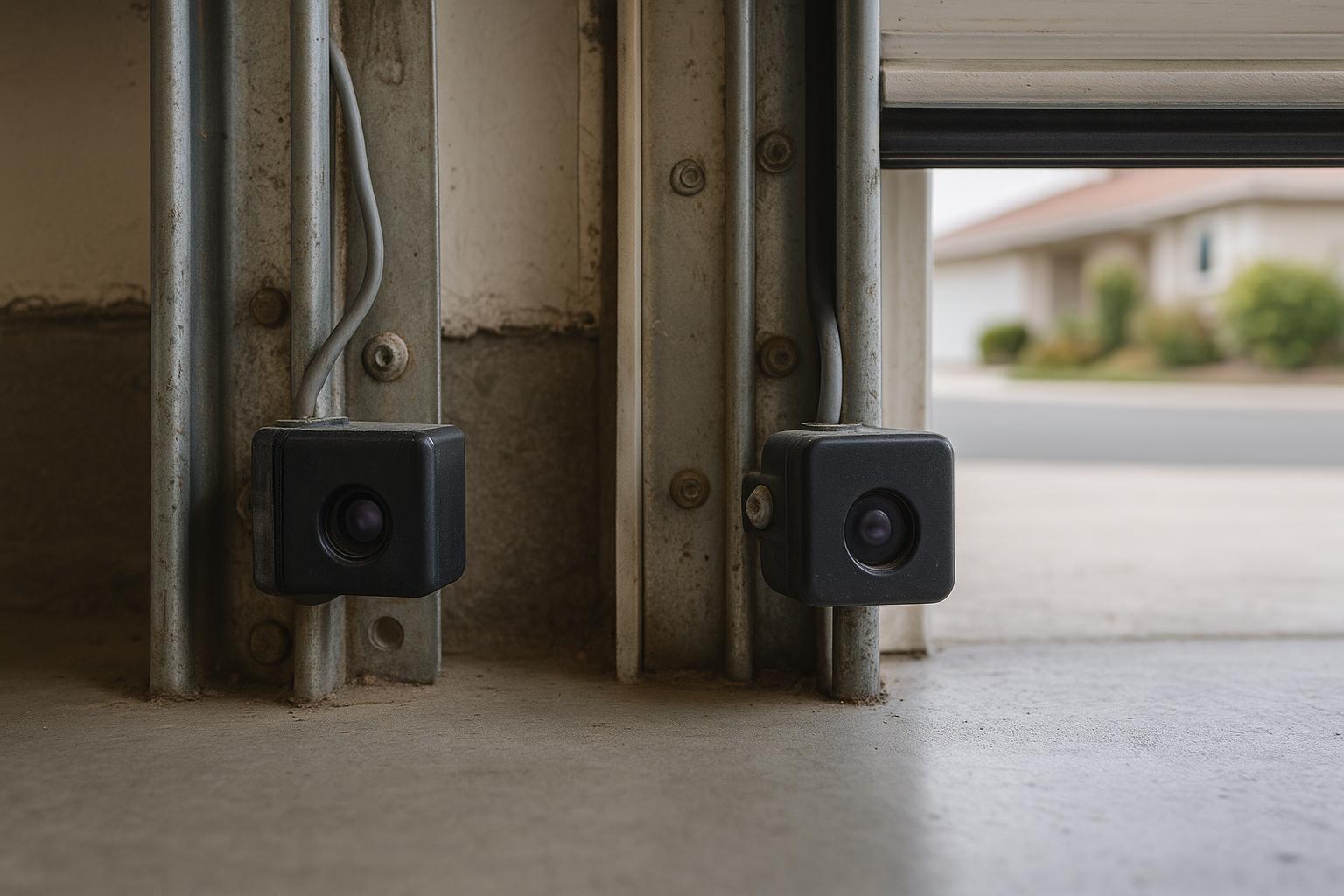
- Photo-eye sensors: These are the small devices mounted near the bottom of your garage door tracks on either side. They project an invisible beam across the door opening. If anything breaks that beam — a person, a pet, a trash can — the door reverses to prevent injury or damage.
- Auto-reverse mechanism: If the door encounters physical resistance while closing (like hitting an object on the ground), it automatically reverses direction.
Both of these systems are essential for safety, especially in households with children and pets. But when they malfunction or get triggered incorrectly, they cause the exact problem you're experiencing.
Common Causes and How to Troubleshoot Them
1. Misaligned or Dirty Photo-Eye Sensors
This is the number one cause of a garage door that reverses before reaching the floor. The photo-eye sensors on either side of the door need to be perfectly aligned and have a clear line of sight to each other. Over time, they can get bumped, shifted by vibration, or covered in dust, cobwebs, and salt residue — something we see frequently here in Imperial Beach due to our coastal environment.
What to try: Gently wipe both sensor lenses with a soft cloth. Check that both sensors have a steady light (usually green). If one is blinking, it's likely out of alignment. Carefully adjust the sensor bracket until the light becomes steady. Make sure nothing is blocking the beam between the two sensors.
2. Close-Limit Switch Needs Adjustment
Your garage door opener has settings called limit switches that tell the motor how far the door should travel when opening and closing. If the close-limit switch is set incorrectly, the opener may think the door has hit an obstruction when it's actually just reaching the ground. The motor interprets the resistance as a safety issue and reverses.
What to try: Most openers have adjustment screws or dials on the motor unit labeled "down limit" or "close limit." Consult your owner's manual for specific instructions. Small adjustments — usually a quarter turn at a time — can make a big difference. Be careful not to over-adjust, as setting the limit too far can cause the door to press too hard against the floor and damage the weatherseal or the opener itself.
3. Worn or Damaged Tracks
If your garage door tracks are bent, dented, or have accumulated debris, the door may bind or encounter resistance as it travels downward. The opener senses this resistance and reverses. Inspect the tracks on both sides of the door for visible damage, rust, or obstructions. In coastal communities like Imperial Beach, Coronado, and Nestor, salt air can accelerate corrosion on metal components, making this issue more prevalent than in inland areas.
What to try: Clean the tracks with a damp cloth and remove any debris. If you notice bends or dents, it's best to call a professional rather than trying to hammer them out yourself, as improper repairs can make the problem worse.
4. Broken or Worn Rollers
Garage door rollers allow the door to glide smoothly along the tracks. When rollers crack, chip, or seize up, they create friction that the opener may interpret as an obstruction. Nylon rollers can wear out over time, and steel rollers can rust — again, something accelerated by our salty coastal air.
What to try: Visually inspect the rollers on both sides of the door. If they appear cracked, flat-spotted, or won't spin freely, they need to be replaced. While some homeowners replace bottom and middle rollers themselves, the rollers near the top of the door are under spring tension and should be handled by a trained technician.
5. Spring Problems
Your garage door springs do the heavy lifting — literally. They counterbalance the weight of the door so the opener motor doesn't have to work as hard. If a spring is weakening, broken, or improperly balanced, the door becomes heavier than the opener expects. This extra resistance can trigger the auto-reverse.
What to try: Disconnect the opener by pulling the emergency release cord, then try lifting the door manually. A properly balanced door should stay in place when lifted halfway. If it slams down or feels extremely heavy, you have a spring issue. Do not attempt to adjust or replace garage door springs yourself. They are under extreme tension and can cause serious injury. This is a job for a professional.
6. Opener Motor or Logic Board Issues
If you've checked everything above and the problem persists, the issue may be with the opener itself. The motor could be failing, or the logic board — the electronic brain of the opener — could be malfunctioning. Power surges, age, and humidity can all contribute to electronic failures.
What to try: Try unplugging the opener for 60 seconds and plugging it back in to reset the system. If the problem continues, it's time to have a technician diagnose the opener.
When to Call a Professional
Some of the troubleshooting steps above are safe for handy homeowners to attempt. But there are clear situations where you should call in a garage door specialist:
- You suspect a broken or weakening spring
- The tracks are visibly bent or damaged
- The opener continues to malfunction after basic troubleshooting
- The door is making grinding, scraping, or popping noises
- You're not comfortable working with the mechanical or electrical components
At Imperial Beach Garage Door Specialists, we serve homeowners throughout Imperial Beach, Chula Vista, National City, San Ysidro, and the surrounding South Bay area. We diagnose the root cause of the problem — not just the symptom — so you get a lasting fix rather than a temporary workaround.
Prevent Future Issues with Regular Maintenance
Many of the problems that cause a garage door to reverse prematurely can be caught early with routine preventive maintenance. A professional tune-up typically includes lubricating moving parts, inspecting and adjusting springs, testing safety sensors, tightening hardware, and checking the opener's settings.
We recommend scheduling maintenance at least once a year — or twice a year if you live close to the coast where salt air takes a heavier toll on your garage door system. It's a small investment that can save you from unexpected breakdowns and costly emergency repairs.
Don't Ignore a Reversing Garage Door
A garage door that won't close properly isn't just an inconvenience — it's a security risk and a potential safety hazard. If your door is reversing and you can't resolve it with basic troubleshooting, reach out to us. We offer prompt, honest service and we'll have your garage door working reliably again.