
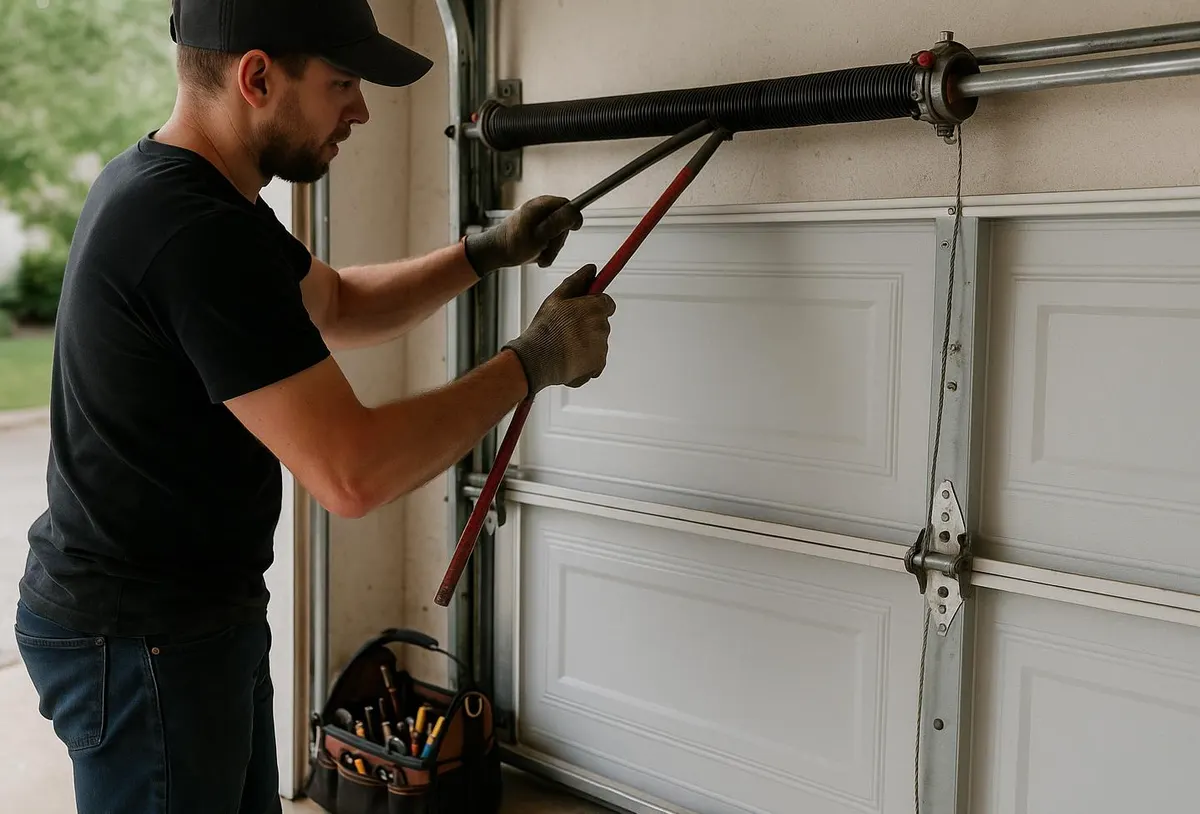
Rule of thumb: if your garage door struggles in the exact same spot every single time it opens or closes, the tracks are bent or out of alignment. If the door struggles unevenly or at random points, the problem is more likely a spring, cable, or opener issue, not the track — so don't assume track damage just because the door feels rough.
Symptoms That Point to the Tracks
Track problems tend to show up as mechanical, localized trouble rather than a door that simply feels heavy or slow all over. Watch for:
- The door jerks, bangs, or hesitates at one specific height, every cycle
- A visible gap between a roller and the track, or a roller that looks like it's lifting out of the channel
- Grinding or scraping noise that happens only in one section of travel
- The door closes crooked, with one bottom corner touching the floor before the other
- The opener strains, reverses, or trips its safety sensor at the same point every time
- One side of the track visibly leans away from the wall compared to the other
Any one of these on its own is worth a look. Two or more together almost always means the track has shifted or taken a hit.
Causes, in the Order a Technician Checks Them
1. Impact damage
This is the first thing a tech rules out, because it's the most common and the easiest to see. A car bumper, a bike handlebar, a ladder, or a stack of stored items can knock the vertical track out of true in a single hit. Impact damage usually shows up as a sharp kink rather than a gradual curve, and it's almost always on the lower section of track where things in the garage are most likely to make contact.
2. Loose or missing fasteners
Tracks are held to the wall framing with brackets and lag bolts, and those connections loosen over years of vibration from daily opening and closing. In homes with wood-frame garages, seasonal moisture from winter rain can also let framing shift slightly, which pulls bracket anchors just enough to let the track rack out of plumb. A tech checks every bracket along both tracks for play before assuming the metal itself is bent.
3. Roller wear and binding
Worn, flat-spotted, or corroded rollers don't glide cleanly through the track — they bind, and a door that's binding gets forced through that spot every cycle. Over time that repeated forcing can actually bend the track from the inside, so what looks like a track problem is really a roller problem that's been left unaddressed. In coastal areas, salt air speeds up roller wear on metal rollers, which is one more reason this step comes early in the inspection.
4. Settling or shifting of the garage structure
Slab foundations shift slightly over years, and homes with seismic bracing or past earthquake retrofits can have slightly different stress points along the garage opening than they did when the door was installed. This kind of shift is usually gradual, showing up as a slow creep in symptoms over months rather than a sudden jam.
5. Debris and grit buildup
During dry months, dust and occasional wildfire smoke residue settle into the track channel and mix with old lubricant into a gritty paste. This buildup doesn't bend metal, but it mimics the symptoms of a bent track — localized sticking, grinding, uneven travel — so a tech rules it out by cleaning the track before concluding the metal itself is damaged.
What Each Fix Actually Involves
- Minor bend correction: for a small kink, a technician can often reshape the track in place using a mallet and a track-bending tool, then recheck it against a level before reinstalling rollers.
- Bracket re-anchoring: loose mounting points get retightened or re-anchored into solid framing, and the track is re-plumbed before the bolts are torqued down.
- Section replacement: if the track has a sharp crease or is cracked rather than just bent, the damaged section is cut out and spliced with new track rather than trying to hammer it straight, since a creased track will keep failing in that spot.
- Roller replacement: worn metal rollers are typically swapped for sealed nylon rollers, which run quieter and hold up better against salt air corrosion.
- Full track replacement: reserved for tracks that are bent in multiple places or badly corroded, since patch repairs on compromised track rarely hold up long term.
In most cases a technician handles two or three of these in the same visit — for example, cleaning the track, tightening brackets, and swapping worn rollers — rather than any single fix in isolation, because track problems rarely come from just one cause.
When to Call Imperial Beach Garage Door Specialists
If your door hesitates or jerks at the same spot every time, or you can see daylight between a roller and the track, it's worth getting it looked at before the door comes fully off its track and leaves you stuck with it open or closed. Our Garage Door Repair visits include a full track and roller inspection, so we catch bracket, roller, or alignment issues before they turn into a bigger repair. If the door has already jumped the track or won't move at all, our Emergency Garage Door Service gets a technician out to safely reset it and assess the damage.
If you're in Imperial Beach, Chula Vista, Coronado, National City, San Ysidro, Nestor, Palm City, or Otay Mesa and your garage door is sticking, jerking, or closing crooked, give Imperial Beach Garage Door Specialists a call — we'll get your tracks back in line and your door moving smoothly again.